Explore our network of country and industry based websites to access localized information, product offerings, and business services across our group.
Log in to start sending quotation requests for any product.
Don't have an account? Sign Up Here
Home Pellet Binder Sourcing Guide: Industrial Applications and Buyer Trends
Trade Insights | Applications and Buyers | 19 June 2026
Understanding Pellet Binder and Its Industrial Role
Major Industrial Applications of Pellet Binder
Market Trends Influencing Pellet Binder Demand
Buyer Intent and Procurement Considerations
Global Supply and Sourcing Opportunities
Evaluating Suppliers and Product Quality
Future Outlook for Pellet Binder Markets
Conclusion
Sources
Pellet binders are functional additives used to improve the physical strength, durability, and handling properties of pellets produced in industrial manufacturing systems. These materials help particles adhere together during pelletizing processes and reduce breakage during transportation, storage, and final use. Industries using pelletized products often require consistent pellet quality because product performance can directly affect operational efficiency and customer requirements.
Pellet binders operate by enhancing cohesion between raw material particles and creating stronger structural integrity throughout pellet formation. Depending on formulation and intended use, pellet binders can consist of organic compounds, minerals, starch-based materials, lignosulfonates, gums, or specialized industrial additives. Their role extends beyond simple adhesion because they can also influence moisture retention and pellet density characteristics.
According to technical information published by the Food and Agriculture Organization (FAO), pellet quality and durability significantly affect feed handling performance and nutritional delivery efficiency in feed manufacturing systems. Manufacturers therefore place increasing importance on additives that improve pellet consistency.
Industrial processors frequently evaluate pellet binders based on compatibility with production equipment and target formulations. Production facilities seek additives capable of maintaining stable performance under varying processing conditions including temperature, pressure, and moisture levels.
As industrial automation expands across manufacturing sectors, pellet producers continue focusing on process optimization, making pellet binders increasingly important components in production strategies.
Industrial demand for pellet binders continues expanding because pelletized products are increasingly used in multiple commercial sectors. Different industries require unique pellet characteristics depending on performance objectives and operating environments.
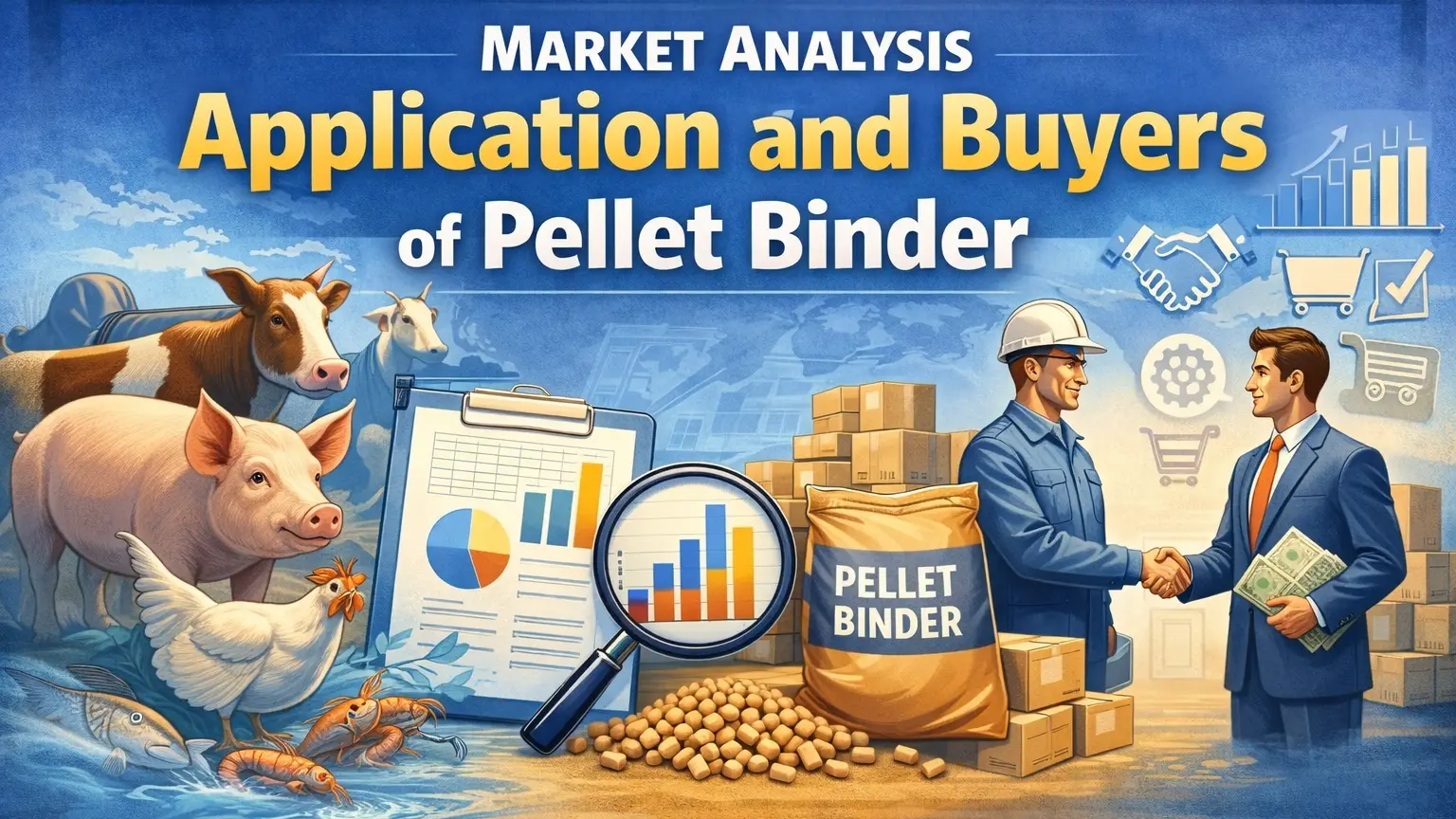
Animal feed manufacturing represents one of the largest applications for pellet binders because feed producers require strong pellets that maintain structural integrity through storage and transportation. Livestock, poultry, and aquaculture sectors use pelletized feed products to improve feeding efficiency and reduce waste.
Based on technical information from the United States Department of Agriculture (USDA), efficient feed manufacturing practices contribute significantly to livestock productivity and feed utilization. Pellet binders support these goals by helping maintain pellet quality during handling and delivery.
Biomass energy manufacturers also use pellet binders during fuel pellet production. Wood residues, agricultural by-products, and biomass materials may require binding additives to achieve durability standards and transportation requirements.
Industrial mineral processing and specialty material manufacturing increasingly adopt pelletized products for easier handling and process efficiency. Pellet binders support these applications by improving product consistency and reducing material losses.
Global demand for pellet binders continues evolving alongside developments in food production, sustainable energy initiatives, and industrial processing technologies. Market activity increasingly reflects changing customer priorities and operational requirements.
Growth in global animal protein consumption continues supporting demand for feed production technologies. Increasing poultry and aquaculture output in developing economies has contributed to rising interest in feed efficiency and manufacturing optimization.
According to market analysis published by the Organisation for Economic Co-operation and Development (OECD) agricultural outlook studies, long-term livestock and aquaculture expansion is expected to support continued growth in feed ingredient demand worldwide.
Sustainability initiatives also influence pellet binder consumption patterns. Biomass energy projects and renewable fuel programs have increased interest in pellet production technologies designed to improve energy efficiency and reduce environmental impact.
Technological advancements in pellet manufacturing systems additionally encourage adoption of performance-enhancing additives. Manufacturers seek production solutions that improve throughput while maintaining quality standards.
Commercial buyers typically evaluate pellet binders according to performance requirements, production efficiency goals, and total procurement value. Purchasing decisions frequently involve technical and operational considerations rather than simple price comparisons.
Feed manufacturers, biomass producers, distributors, industrial processors, and contract manufacturers represent common buyer groups for pellet binders. These organizations often purchase materials through direct suppliers, regional distributors, or B2B chemical marketplaces.
According to procurement studies from supply chain management organizations, industrial buyers increasingly emphasize supplier reliability, quality consistency, and supply continuity during purchasing decisions.
Procurement teams typically assess factors including pellet durability performance, dosage requirements, compatibility with raw materials, regulatory compliance requirements, and logistics capabilities before selecting suppliers.
Buyers compare suppliers because operational disruptions, formulation changes, and fluctuating raw material costs can directly affect production efficiency. Product pages supporting sourcing decisions therefore require technical specifications, application information, supply availability details, and commercial support resources.
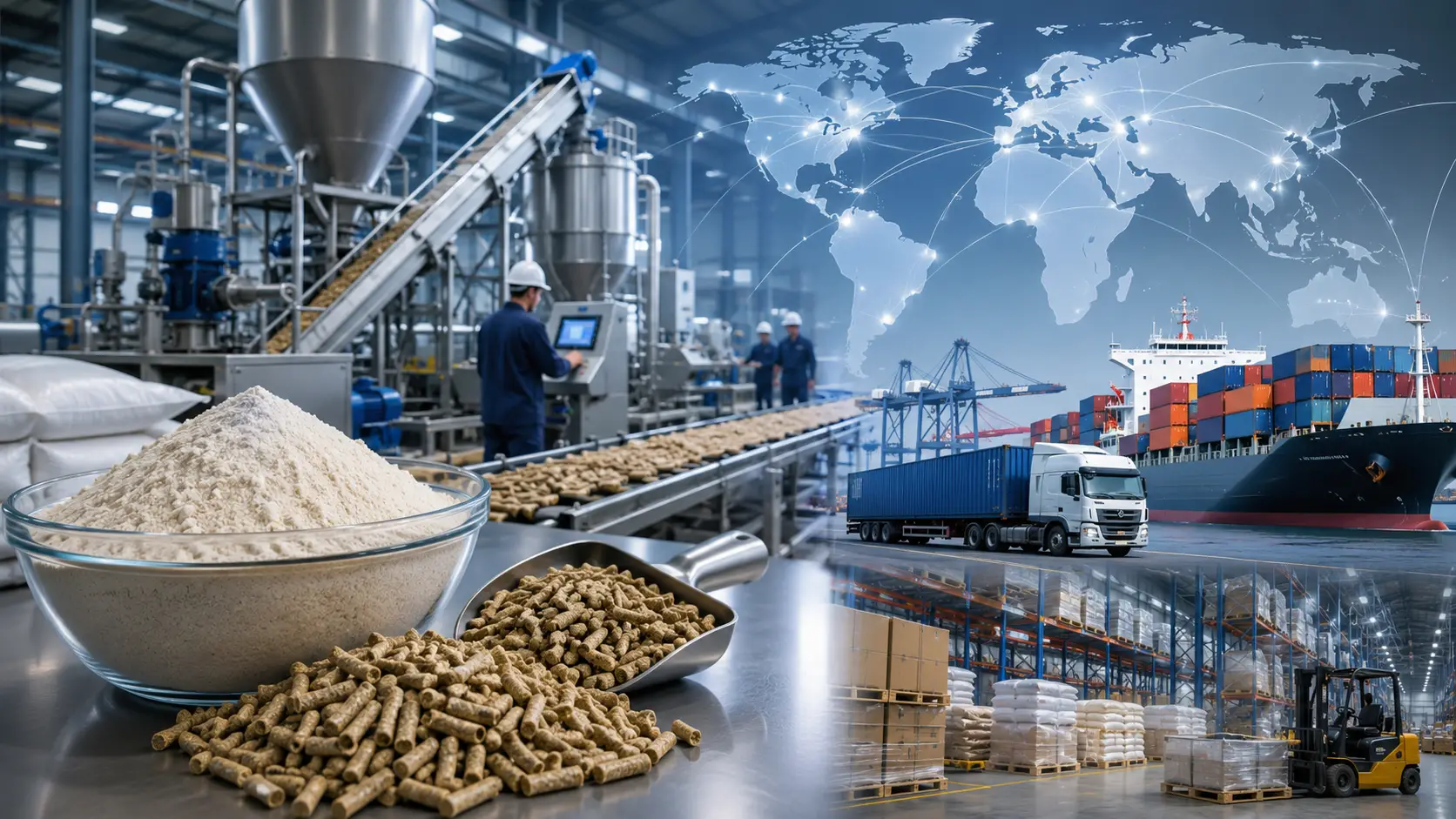
International trade activity creates significant opportunities for pellet binder manufacturers, traders, and procurement teams seeking diversified supply options. Global sourcing strategies increasingly balance cost competitiveness with supply chain resilience.
Asia continues serving as a major manufacturing hub because of expanding feed production and industrial growth. Countries with strong chemical manufacturing capabilities frequently support regional and export demand for pellet additives.
According to trade and industrial reports from international market observers, supply chain diversification remains a major priority among industrial buyers following recent disruptions affecting global logistics networks.
Procurement organizations increasingly consider multiple sourcing regions rather than depending exclusively on single-market suppliers. Diversified sourcing strategies can improve risk management and supply continuity.
Digital B2B marketplaces further support global sourcing activities by enabling buyers and sellers to connect efficiently while comparing specifications, availability, and supplier capabilities.
Supplier evaluation has become an important process for organizations seeking stable long-term sourcing relationships. Industrial purchasing teams increasingly prioritize measurable quality indicators and supplier transparency.
Reliable pellet binder suppliers generally provide product documentation including technical data sheets, specification ranges, and quality assurance information. These documents help buyers determine product suitability before commercial purchasing activities occur.
According to quality management guidance from international industrial standards organizations, documented quality systems contribute to consistency and process reliability throughout manufacturing operations.
Manufacturers also assess supplier responsiveness, logistics performance, production capacity, and technical support capabilities during qualification procedures. Long-term supply agreements frequently require consistent performance across these areas.
Companies using B2B marketplaces often compare suppliers to identify opportunities for balancing cost, quality, and operational requirements within procurement strategies.
Pellet binder markets are expected to continue evolving as industries adopt new technologies and seek higher production efficiency. Demand growth will likely remain connected to developments in feed production and sustainable industrial practices.
Increasing global focus on sustainable resource utilization may strengthen demand for biomass pellets and environmentally responsible manufacturing practices. These developments can create additional opportunities for pellet binder innovation.
Industry outlook studies published by agricultural and manufacturing organizations suggest continuing investment in process optimization technologies and advanced production systems.
Future product development may emphasize performance improvements, lower usage rates, and greater compatibility across multiple pellet formulations. Innovation could also focus on environmentally preferred materials and operational efficiency gains.
Manufacturers, distributors, and procurement teams monitoring market developments may identify new sourcing and investment opportunities as industrial requirements continue changing.
Pellet binders play an important role in supporting pellet quality across feed, biomass, and industrial manufacturing applications. Their ability to improve durability and process efficiency makes them valuable components within production systems.
Commercial buyers increasingly evaluate pellet binders not only on product performance but also on sourcing reliability, regulatory considerations, and long-term supply stability.
Growing industrial demand and changing market requirements continue creating opportunities for manufacturers and procurement teams operating in global supply networks.
Organizations using informed sourcing strategies and reliable supplier partnerships can improve operational performance while responding effectively to changing market conditions.
We're committed to your privacy. Tradeasia uses the information you provide to us to contact you about our relevant content, products, and services. For more information, check out our privacy policy.


 English
 Indonesian
 简体字
简体字
 العربية
 Español
 Français
 Português
 日本語
日本語
 한국어
한국어
 Tiếng Việt